Epilepsy first aid: what to do if someone has a seizure
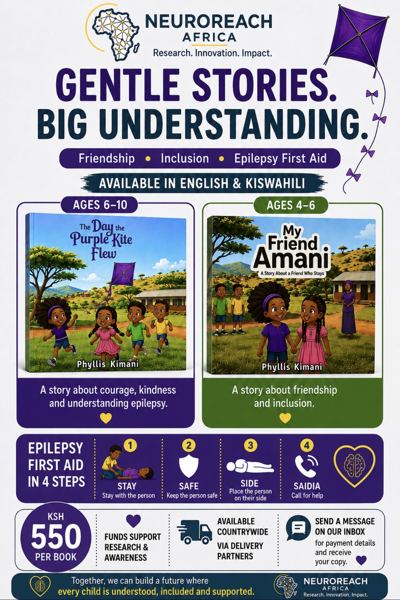
Most seizures stop by themselves within a few minutes. Until it stops, your job is to keep the person safe. These steps follow the four words children learn in our Friends Series books: Stay. Safe. Side. Saidia. In our UK edition, the last word is "Send for help".
The four steps: Stay. Safe. Side. Saidia.
- Stay. Stay with them and stay calm. Note the time the seizure starts. Keep other people back to give the person privacy.
- Safe. Move anything hard or sharp out of the way and put something soft under their head. Loosen anything tight around their neck. Do not move them unless they are in danger, such as near a road, a fire or water.
- Side. Turn them to the side, even during the jerking if it is safe to do so. Turn them gently, without forcing them or holding them down. Once the jerking stops, check they are breathing normally and keep them on their side until they are fully awake (how to do the recovery position).
- Saidia: send for help. Saidia means "help" in Kiswahili. Get medical help if any of the signs below happen, tell their family, and follow their care plan if they have one. You may need to do this while the seizure is still going on, for example if it lasts more than 5 minutes.
When to call for help
Call for help straight away if:
- it is their first seizure
- it lasts more than 5 minutes, or longer than is usual for them
- another seizure starts before they wake up
- they are not breathing normally once the jerking stops (start CPR if you know how)
- they are badly injured
- they do not respond to you 10 minutes after the seizure stops
- the seizure happened in water, even if they seem fine afterwards
- they are pregnant
- you do not know them and cannot find a care plan or ID card, or you are worried
In the UK: call 999.
In Kenya and across Africa: rush them to the nearest health facility. Keep them lying on their side with another adult watching them, and do not carry them sitting up, for example on a motorbike. If an ambulance can reach you quickly, you can call one.
Know where your nearest health facility is and how you would get there quickly.
Many people with epilepsy do not need an ambulance after every seizure. If the person has a care plan or carries an epilepsy ID card, follow what it says. Only people trained to give emergency medicine should give it.
What not to do
- Do not put anything in their mouth, not a spoon, a finger or anything else. They cannot swallow their tongue, and objects can break teeth and block breathing. The only exception is emergency medicine given by a trained person following the care plan.
- Do not hold them down or try to stop the movements.
- Do not give food, drink or tablets until they are fully awake.
- Do not pour water on them or try to bring them round.
- Do not crowd round or laugh. Do not share photos or videos of the seizure without their consent.
After the seizure
Stay with them until they are fully awake, and tell them calmly what happened. They may be confused, tired or have a headache, and many people want to sleep. Recovery can take minutes, hours or sometimes days.
Check for injuries. If they have wet themselves, cover them to protect their dignity.
Different kinds of seizure
Not every seizure involves shaking, and the time limits for getting help differ.
- Convulsive (tonic-clonic) seizure: the person stiffens, may fall, and then jerks. Use the four steps above, and get help if it lasts more than 5 minutes.
- Focal seizure: the person may seem confused, wander, fiddle with their clothes or not answer you. Guide them gently away from danger, speak calmly and do not hold them. Get help if it lasts more than 5 minutes or they are hurt.
- Absence seizure: a few seconds of blank staring, often mistaken for daydreaming, and common in children. Stay with them, guide them away from danger and tell them what they missed. Get help if one lasts 10 minutes or more, or if they are hurt.
For teachers and school staff
A seizure in class can frighten everyone, but you can manage it calmly.
- Send a pupil or colleague to fetch another adult and the pupil's healthcare plan, if they have one.
- Use the four steps. Move the other children back and give the pupil privacy.
- Time the seizure and write down what you saw.
- In the UK, call an ambulance if any of the signs above happen. In Kenya and across Africa, rush the pupil to the nearest health facility, with a member of staff going with them.
- A member of staff should stay with the pupil until a parent or carer arrives. Phoning a parent does not replace getting medical help when it is needed.
- Afterwards, give the pupil a quiet place to rest, and tell their parents or carers the same day.
- A seizure is not a reason to keep a child at home, or out of lessons, trips or play.
Care plans. In England, most state-funded schools must support pupils with medical conditions. Pupils whose condition may need emergency help often need an individual healthcare plan, agreed with their parents and a health professional. The plan says what counts as an emergency and what to do, and is reviewed at least once a year.
Emergency medicine. Some children have emergency medicine, such as buccal midazolam, for long seizures. Only staff who have been trained to give it, following the child's written plan, should do so. Watch the child's breathing afterwards, and get help straight away if it becomes difficult.
In Kenya, the School Health Policy says teachers and learners should receive first aid training or awareness sessions. We run seizure first aid sessions for schools. Contact us to arrange one.
Swimming, PE and trips. Pupils with epilepsy can usually take part, with precautions agreed in their plan, such as close supervision in water. If a seizure happens in water, shout for a lifeguard or another adult, support their head so their face stays above the surface, and move them to shallow water if you can.
Get them out once the seizure stops, lie them on their side and keep them warm. Always get medical help, even if they seem fine.
What to write down. When it started and stopped, what they were doing before, what you saw (which parts of the body moved, any colour change, their breathing) and how they were afterwards.
Talking to the class. Agree what to say with the pupil and their family first. Then explain simply that their classmate had a seizure, that it happens in the brain, that nobody can catch it, and that they are still the same friend. Our children's books were written to help with this conversation.
For parents and families
- Learn the four steps and share them with anyone who looks after your child, such as grandparents, house helps, childminders and teachers.
- Ask your child's doctor or nurse for a written care plan, and give a copy to the school.
- Keep a seizure diary with the date, time, length and what happened. A short phone video, taken once your child is safe, can help the doctor. Do not share it without consent.
- An epilepsy ID card or bracelet helps others know what to do.
- Never leave a young child alone in the bath or near a bucket or basin of water. For older children and adults, showers are safer than baths.
- Take care around cooking and heights, and make sure someone watches closely whenever your child swims.
- Your child's doctor or nurse can talk to you about safety, including the rare risk of sudden unexpected death in epilepsy (SUDEP).
Seizures with a fever (febrile seizures). Some young children, usually between 6 months and 6 years old, have a seizure when they have a high temperature. In Kiswahili, fits in young children are often called degedege. These seizures usually last 2 to 3 minutes and are not the same as epilepsy.
Protect their head, move dangerous objects away and note the time. Turn them to the side, even during the jerking if it is safe to do so. Once it stops, check nothing is blocking their mouth. Do not hold them still, put anything in their mouth, or try to cool them with cold water or by undressing them.
Always get medical help after a seizure with a fever. In places where malaria is common, including many parts of Kenya, a fit with a fever can be a sign of malaria or another serious infection. Take the child to a health facility straight away to be checked, even if the fit has stopped and they seem better.
Call 999 in the UK. In Kenya and across Africa, rush them to the nearest health facility straight away with another adult, if:
- it is their first seizure
- it lasts more than 5 minutes
- they have trouble breathing
- the shaking is on one side of the body only
- they are still very sleepy an hour later
- they have another seizure within 24 hours
Myths and facts
| Myth | Fact |
|---|---|
| Put a spoon in their mouth so they do not swallow their tongue. | Never put anything in the mouth. Nobody can swallow their tongue, and a spoon can break teeth and block breathing. |
| Epilepsy is contagious. | You cannot catch epilepsy. It is safe to touch and help someone having a seizure. |
| Epilepsy is a curse or caused by witchcraft. | Epilepsy is a condition of the brain. Up to 70% of people living with epilepsy could be free of seizures with the right diagnosis and treatment, and faith and medical care can go together. |
| Hold them down to stop the seizure. | Holding someone down does not stop a seizure and can injure them. |
| Water or a drink will bring them round. | Do not give anything by mouth or pour water on them. Let the seizure run its course. |
| Children with epilepsy should stay at home. | Children with epilepsy can and should go to school, with a plan that keeps them safe. |
In 2026 we visited 54 primary schools in Kikuyu sub-county, Kenya. Almost every teacher we met believed a spoon should go in a child's mouth during a seizure, and most thought epilepsy was contagious. These findings come from our own programme and have not yet been published (read the story).
Questions people ask
- What are the steps of seizure first aid?
- Stay with them, keep them safe, turn them to the side (even during the jerking if it is safe to do so), and send for help if needed: Stay. Safe. Side. Saidia.
- Can someone swallow their tongue during a seizure?
- No. Do not put anything in their mouth.
- How long is too long?
- Call for help if a convulsive seizure lasts more than 5 minutes, or longer than is usual for that person.
- Should I turn them on their side during the seizure?
- Yes, if it is safe to do so. Turn them gently onto their side, without forcing them or holding them down, to help keep their airway clear. Once the jerking stops, check their breathing.
- Does everyone who has a seizure need an ambulance?
- No. Many people with epilepsy recover without one. Call for help if it is a first seizure or any of the warning signs above happen.
- What if the seizure happens in a wheelchair?
- Put the brakes on, leave any seatbelt fastened, support their head and let them stay in the chair unless their care plan says otherwise.
- Can school staff give emergency seizure medicine?
- In England, yes, if they have been trained, are following the child's written plan and the parents have given written consent. Staff cannot be made to give it. Kenya's School Health Policy does not cover medicines in school, so agree this with the family and their health worker.
- Is epilepsy contagious?
- No. It is safe to help someone having a seizure.
About this page
Written by Phyllis Kimani, MPharm, founder of NeuroReach Africa.
This page draws on guidance from the NHS, Epilepsy Action, Epilepsy Society, Young Epilepsy, St John Ambulance, the World Health Organization, NICE, the Department for Education (England) and Kenya's School Health Policy. The first three steps build on the US Epilepsy Foundation's "Stay, Safe, Side" message.
It is general first aid information and does not replace advice from a health worker. If the person has their own care plan, follow that plan.
Sources: NHS seizure first aid; NHS febrile seizures; Epilepsy Action; Epilepsy Society; Young Epilepsy; St John Ambulance; Epilepsy Foundation; WHO epilepsy; WHO malaria; NICE NG217; Department for Education; Kenya School Health Policy.
Last updated: .